Six Belgian startups to watch in 2026 that are developing breakthrough solutions in energy, healthcare, climate technology, and autonomous systems.
Last year, I highlighted six Belgian AI startups to watch in 2025. One year on, Belgium’s startup ecosystem continues to punch well above its weight. This follow-up looks at six new names to watch in 2026: ambitious, well-funded, and focused on technologies that could make a tangible difference to everyday life.
1. Bnewable: Making energy storage work for businesses
As Europe’s energy system becomes more decentralised and renewable-heavy, flexibility is no longer optional. Bnewable, based in Zaventem, is positioning itself squarely at that intersection.
What are their strengths?
Bnewable combines battery hardware, intelligent energy management software, and financing into a single offering. This integrated approach allows businesses to benefit from energy storage without the complexity or upfront investment traditionally associated with battery systems.
What are they developing?
The company designs and operates battery energy storage systems that help organisations optimise energy use, store locally produced renewable electricity, and participate in energy markets.
Competitive advantage
Their “battery-as-a-service” model lowers adoption barriers, while proprietary optimisation software maximises both cost savings and grid value.
Benefit for the person on the street
More efficient energy use by businesses contributes to grid stability, lower system costs, and a smoother transition to renewable energy. Hopefully these benefits will ultimately reach households as well.
Timeframe
Bnewable’s solutions are already deployed and scaling, with expansion beyond Belgium underway.

2. PanTera: Securing the supply chain for cancer therapies
PanTera, based in Mol, operates in a highly specialised but critically important field: nuclear medicine.
What are their strengths?
The company focuses on producing actinium-225, a rare radioisotope used in targeted alpha therapies for cancer. Demand is growing fast, but global supply remains extremely limited.
What are they developing?
PanTera is building industrial-scale production capabilities to ensure a reliable, long-term supply of actinium-225 for pharmaceutical developers and hospitals.
Competitive advantage
Their close ties to Belgium’s nuclear research ecosystem and their focus on both production and recycling of materials give them a strategic edge in a supply-constrained market.
Benefit for the person on the street
A stable supply of actinium-225 enables the development of more precise cancer treatments, potentially improving survival rates and reducing side effects.
Timeframe
Early supply is already available, with large-scale production facilities expected to become operational later this decade.

3. Sirona Technologies: Pulling carbon straight from the air
Direct air capture (DAC) is emerging as a necessary complement to emissions reduction. Sirona Technologies is one of Belgium’s most promising players in this space.
What are their strengths?
Sirona focuses on simplicity, modularity, and speed of deployment. Their systems are designed to be manufactured off-site and installed quickly, reducing capital costs.
What are they building?
Industrial direct air capture units that remove CO? directly from ambient air, enabling permanent carbon removal.
Competitive advantage
A modular, scalable design that can be deployed globally and adapted as capture materials improve.
Benefit for the person on the street
While not immediately visible, carbon removal helps limit the long-term impacts of climate change, from extreme weather to rising insurance and food costs.
Timeframe
Pilot installations are operational, with commercial deployment scaling through 2026.

4. Spica Therapeutics: Rethinking immune-based treatments
Belgium’s biotech sector remains one of its strongest innovation engines, and Spica Therapeutics is a good example of why.
What are their strengths?
Spica focuses on macrophages. These are immune cells involved in cancer, inflammation, and autoimmune diseases. Targeting these cells opens up new therapeutic possibilities.
What are they developing?
Novel therapies designed to selectively modulate macrophages, potentially addressing diseases that respond poorly to existing treatments.
Competitive advantage
A proprietary platform that allows precise identification and targeting of disease-driving macrophage populations.
Benefit for the person on the street
New treatments could improve outcomes for patients with difficult-to-treat cancers or chronic inflammatory conditions.
Timeframe
The company is in early development, progressing towards preclinical and clinical milestones over the coming years.

5. Aidoptation: From autonomous racing to real-world mobility
Aidoptation is a Belgian-American startup with roots in high-speed autonomous racing.
What are their strengths?
Their technology has been tested in extreme conditions, where reliability and performance are critical. It’s an unusual but powerful proving ground.
What are they developing?
EdgeDrive, an AI-driven autonomous driving platform aimed at commercial vehicles, emergency services, and defence-related applications.
Competitive advantage
A dual-use focus (civil and defence) combined with technology validated at high speeds and advanced readiness levels.
Benefit for the person on the street
Autonomous systems could improve road safety, enhance emergency response, and enable new mobility services.
Timeframe
EdgeDrive has reached advanced technology readiness, with pilot deployments likely before full commercial rollout.

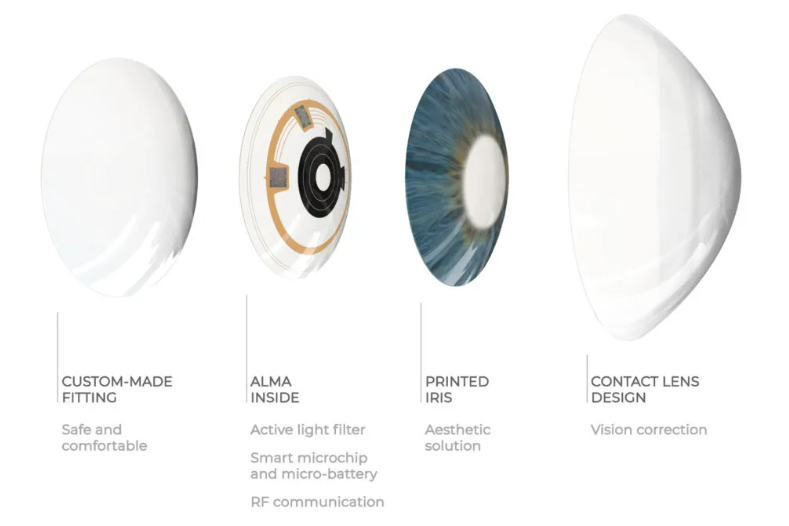
6. Azalea Vision: Smart contact lenses with a medical brain
Azalea Vision operates at the intersection of medtech, optics, and electronics.
What are their strengths?
The company is developing smart contact lenses that adapt dynamically to changing visual conditions, rather than offering static correction.
What are they building?
A connected contact lens integrating adaptive optics, microelectronics, and sensors to address complex eye conditions such as keratoconus and presbyopia.
Competitive advantage
Real-time adaptability and connectivity open the door not just to vision correction, but to diagnostics and future therapeutic applications.
Benefit for the person on the street
Patients with difficult vision problems could gain a non-invasive, highly personalised alternative to surgery or rigid corrective lenses.
Timeframe
Prototypes have already been tested, with clinical and regulatory pathways underway ahead of commercial launch.
If 2025 was about promise, 2026 looks set to be about execution. Several of these Belgian startups are already moving from concept to deployment, making them well worth watching in the year ahead.

I created Discovering Belgium in 2011 to share the country’s hidden stories, fascinating places, and remarkable people. Through articles, photography, and audio walks, I share discoveries that reveal Belgium beyond the obvious. Hope you enjoy this site.
Way to go, Belgium!